Monday, February 21, 2011

When Disk Image Gets Corrupted in Mac


In Mac the disk image is a file that contains all of the contents and the structure of your storage device. Creating disk image is the most convenient method of backing up your precious data stored on the hard drive. There are several different file formats used to create the image of hard drive in Mac and .DMG is the most popular among them.

A .DMG (short for Disk Image) file allows you to have safe password protection and file compression and thus serves both file distribution and security functions. When you open the .DMG file, it is mounted as a drive in Finder. You can easily create .DMG files using tools that are included in Mac OS such as Disk Utility in Mac OS X 10.5, 10.4 and 10.3. You can also manage the .DMG files through command line using hdiutil tool.

Creating disk image is the best option to prevent data loss but sometimes when you try to mount the disk image for accessing data from it, you might encounter the following error message: "The disk image you are opening may be damaged and could damage your system. Are you sure you want to open this disk image?"

Mac OS X detects the damaged disk image before mounting it as the damaged image could results into the data loss. In such situations, you can not restore your data from the .DMG file and thus you need to go for Mac Data Recovery to fix the problem. Mac Data Recovery is the process of scanning your hard drive for extracting the missing, lost or inaccessible data from it.

It is potential in most of the data loss situations and helps you to save you business critical and personal data. You can perform Mac Data Recovery in an easy, safe, quick and automated way using powerful and advanced Mac Recovery software such as Mac Data Recovery. This Mac Recovery software is capable of fixing most of the logical Mac data loss situations.

Wednesday, February 16, 2011

Recover Data from Unbootable MacBook

You have your Mac in configured status but sometimes when you start your MacBook, it does not boot. All you see when you press power button is the gray screen with a spinning wheel and an Apple logo. This problem generally occurs when you change the system preferences.

If you have changed the system preferences incorrectly before shutting down your MacBook, you may face such kind of behavior. In such situations, all of your precious data becomes inaccessible and thus you need to fix it as quickly as possible.

You can try following things to solve out this problem:

Perform Safe Boot by pressing shift key during startup.
Boot your system in Single User mode by pressing ‘command + s’ keys.
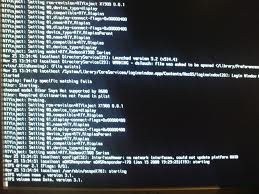
Try to boot your MacBook in Verbose mode using ‘command + v’ keys.
Use Disk Utility from Mac OS X Install disk to verify the drive.

If any of the these solutions does not work, then you need to go for Mac Data Recovery. It is the process of scanning your Mac hard drive and extracting lost data from it.

Mac Data Recovery can easily be performed using Mac Recovery software. Most of the Mac Data Recovery software are downloadable from Internet or come in box version that requires another Mac system to install the software and connect your hard drive to it for scanning and recovering data.

If you do not have another Mac computer, they using these software is not possible. In such situations, you should go for boot DVD of Stellar Phoenix Macintosh Data Recovery software.

You need to just boot your MacBook using boot DVD and after software’s License Agreement you will be directed to recover options screen. This Mac Recovery software is very easy to use and performs safe Mac Data Recovery due to read-only and non-destructive conduct.

Wednesday, February 9, 2011

Mac OS X Refuses to Boot in Safe Mode


Mac OS X operating system has various booting modes, which include Normal boot mode and Safe boot mode. Safe Boot is a special system troubleshooting boot mode, which is available with Mac OS X 10.2 and later versions. If your system is not booting up properly and you are unable to access your precious data, Safe Mode may help you. However, in some situations, it may not help you fix the problem and you run across data loss situations. At this point, Mac data recovery becomes need of hour.

When you boot Mac OS X system in Safe Mode, the operating system disables fonts, compels directory check, loads only the required kernel extensions, disable startup items, and login items. It helps the operating system boot properly and gives an option to resolve the problem. Mac OS X operating system starts automatic system checking and repair when you boot the system in safe mode.

Under some situations, your Macintosh computer may shutdown improperly when you try to boot it in Safe Mode. In such cases, the system remains unbootable and you can not extract your significant data from it. The problem usually occurs if any of the Mac data structures is damaged.

In case the boot process fails, you need to format the Mac OS X hard drive and reinstall the operating system. It replaces the damaged or faulty data structures of your Mac machine.

Hard drive formatting can fix most of the hard drive problems. The newly installed operating system is usually free from all kinds of data structure errors. However, the major drawback of this process is complete data loss. Formatting removes all the contents of the disk. This behavior puts you in need of Mac data recovery solutions.

At this point of time, you are required to restore lost data from the most recent backup. Backup is the most efficient Apple OS X recovery solution. In order to ensure absolute Mac file recovery, you must have an updated and valid backup in place. An old backup can cause serious problems.

When all your attempts fail, Mac recovery software becomes essential. The third-party applications are particularly designed to perform thorough scan of entire disk using advanced scanning techniques.

Such tools are incorporated with interactive user interface to let you recover lost data in a safe way, without demanding sound technical skills

Wednesday, February 2, 2011

Catalog File Corruption in Mac

Catalog File is a Mac system file that is used by HFS (Hierarchical File System) File Manager to keep information about hierarchy of the files and directories on Mac volume.

The catalog file is ordered as B-tree file and thus consists of header node, leaf nodes, index nodes and map nodes (if necessary). The allocation block number of first file extent of catalog file is stored in Master Directory Block or MDB.

When you mount the volume, the stored information is copied in the volume control block of that volume. From header volume, File Manager could access node number of the root node of catalog file and from root node, File Manage could find whole catalog file.

A unique CNID (Catalog Node ID) is assigned to the every node of catalog file. For files CNID is file ID and for directories its directory ID. For a given directory or file, the parent ID is CNID of parent directory. When operating system accesses files or data from HFS file system volume, it first interacts to the catalog file and gathers complete information about the hierarchy.

But sometimes when you try to access data from your hard drive, you may get an error message similar to the following:

“Verifying volume
Checking HFS Plus volume.
Invalid record count
Catalog file entry not found for extent
The volume needs to be repaired.”

After this error message, you can not access data from Mac volume and thus face the critical situations of data loss.

You may encounter this problem because of corruption to the catalog file. Due to same, operating system can not file the required information to read data from volume. To fix this problem, you need to go for Mac Data Recovery. You can carry out Mac Data Recovery in an easy and straightforward way using third party Mac Recovery software.

Thursday, January 13, 2011

iMac G5 Does Not Boot Up and Data Loss Occurs

Apple offers a wide range of desktops and laptops to fulfill your personal as well as business requirements. Among all desktop series, iMac is the most popular and widely used one. It has a bunch of features and stylish look. This computer is designed for both home and office users.

iMac has four major modes, such as iMac (Intel-based), iMac G3, iMac G4, and iMac G5. However, in some situations, iMac G5 may crash and make your precious data inaccessible. At this point, you need to opt for Mac data recovery solutions to retrieve your inaccessible data.

iMac G5 employs PowerPC process architecture. Other system specifications of iMac G5 include V .92 modem, 10/100BASE-T Ethernet port, and video-out port. However, under some situations, iMac G5 might stop responding at startup and cannot boot up. This problem usually occurs due to issues with operating system and put you in need of Mac recovery solutions. The problem may also occur due to hard drive or external hard drive issues.

Find out cause of this problem-

To check out whether the problem is caused by external hard drive, you are required to first disconnect all Ethernet, USB, and FireWire devices. Then reconnect all devices one bye on to your iMac and reboot the system. If you face the same problem after connecting a specific device, then it has to be replaced. The problem can be due to faulty cable as well.

Corruption to system software can also lead to this problem. At this point, boot your system using Mac OS X installation disk. If your computer starts properly, then the problem is caused by corrupt operating system and fresh installation of Mac OS X is required.

If your system is still unbootable and hard drive is invisible, the disk might be damaged. In such situations, you can try repairing the hard drive using Disk Utility to perform data recovery Mac.

If none of the above methods work, then you will have to replace the hard drive. But in this case, Mac recovery is required to extract data from damaged disk.

You can easily perform file recovery Mac using Mac file recovery software. Such Apple OS X recovery applications are designed to recover Mac data in all data loss situations. The HFS+ recovery tools are totally safe and easy to use.

Wednesday, January 5, 2011

Time Machine Backup Fails to Restore on Mac OS X 10.6 Snow Leopard

Like all other computer operating systems, Mac OS X 10.5 Leopard and 10.6 Snow Leopard also include a data backup utility, known as Time Machine. It facilitates you to backup selected files and restore them whenever required. It enables you to schedule the backup to automate the backup process.

You can backup data to an external Time Machine drive to ensure absolute safety of your significant data. The backup helps you prevent needs of Mac data recovery solutions.

The Time Machine utility is not compatible to the Windows formatted hard drive, external AirPort disk, iDisk, and any mapped network disk that uses a file sharing mechanism other than AFP (Apple File Protocol). Due to the same, Snow Leopard may not recognize these backup disks and restoration process fails.

When you attempt to perform Mac recovery using the Time Machine backup, it throws ‘109’ error during the process and Mac file recovery process fails.
Root of the problem

This behavior of Mac OS X 10.6 Snow Leopard operating system occurs when you backup data to an external hard drive or a network drive that is connected to the AirPort Extreme, which are not compatible to Time Machine of Snow Leopard. Although, Airport Extreme might seem to work with the Time Machine, however it is not supported.

The Time Machine works only if the network server uses AFP file sharing mechanism and both the networked and root system must have Mac OS X 10.6 Snow Leopard operating system installed.

Resolution

You can sort out this behavior by replacing AirPort Extreme disk with Time Capsule. In such situations, the below workarounds may also enable AirPort disk to function-

Rename Time Machine disk and AirPort computer to small and un-complex name.

Uncheck option related to backup data at low battery power in the laptops.

Make non-network location for adding the Time Machine device interface to it.

In case you lose your significant data and the Time Machine backup fails to restore, data recovery Mac becomes need of hour. You can recover Mac files using advanced file recovery Mac applications.

Mac recovery software enables you to thoroughly scan entire hard drive and recover Mac data in all data loss situations. The Apple OS X recovery software come equipped with simple graphical user interface to ensure easy Mac data recovery.

Stellar Mac Data Recovery is the most efficient Mac recovery utility to recover Mac files from HFS, HFS+, HFSX, HFS Wrapper, and FAT file system volumes.

Sunday, December 12, 2010

Logical Data Recovery on Mac OS X

When you need to get your lost files back, you will have to use a data recovery software which is supportive to the combination of your operating system and file system. All of the computer operating systems have different data structures; file system and data storage management mechanisms.

Mac operating system uses HFS, HFS+, HFSX, HFS Wrapper file systems. There is no set method of data recovery on any of the operating system. The data recovery software could be the same for different data loss cases of one operating system but the features, which you need to use, may be different according to the reason of data loss.

If you are facing the data loss problem with your Mac system and want to get all your data back, the first step to take is the selection of an effective and powerful Mac data recovery software. There is a wide range of data recovery software for Mac available in the market.

All of these Mac recovery software have a unique set of features and come with different price tags. An intensive scan of the affected hard drive is really significant to completely recover all of the data from the hard drive. You should go for a data recovery Mac software which is capable of performing the same in an effective fashion. Having an easy to use and simple user interface is also the must for a Mac data recovery software.

The Mac recovery software, you are going to opt for, must be simple enough to use without having any prior technical knowledge. The last and the most important thing that you should look for in a Mac recovery software is the file system and the file version support. The software should support all the file versions and file systems which are usable in Mac. After selecting an appropriate data recovery Mac software,

The next step is to find a healthy Mac computer, to install and run the software in it because installing the software on the same computer could make the data irretrievable. After installing the Mac data recovery software, attach the affected hard drive to it and scan it to end up with absolute data recovery.